01
Background
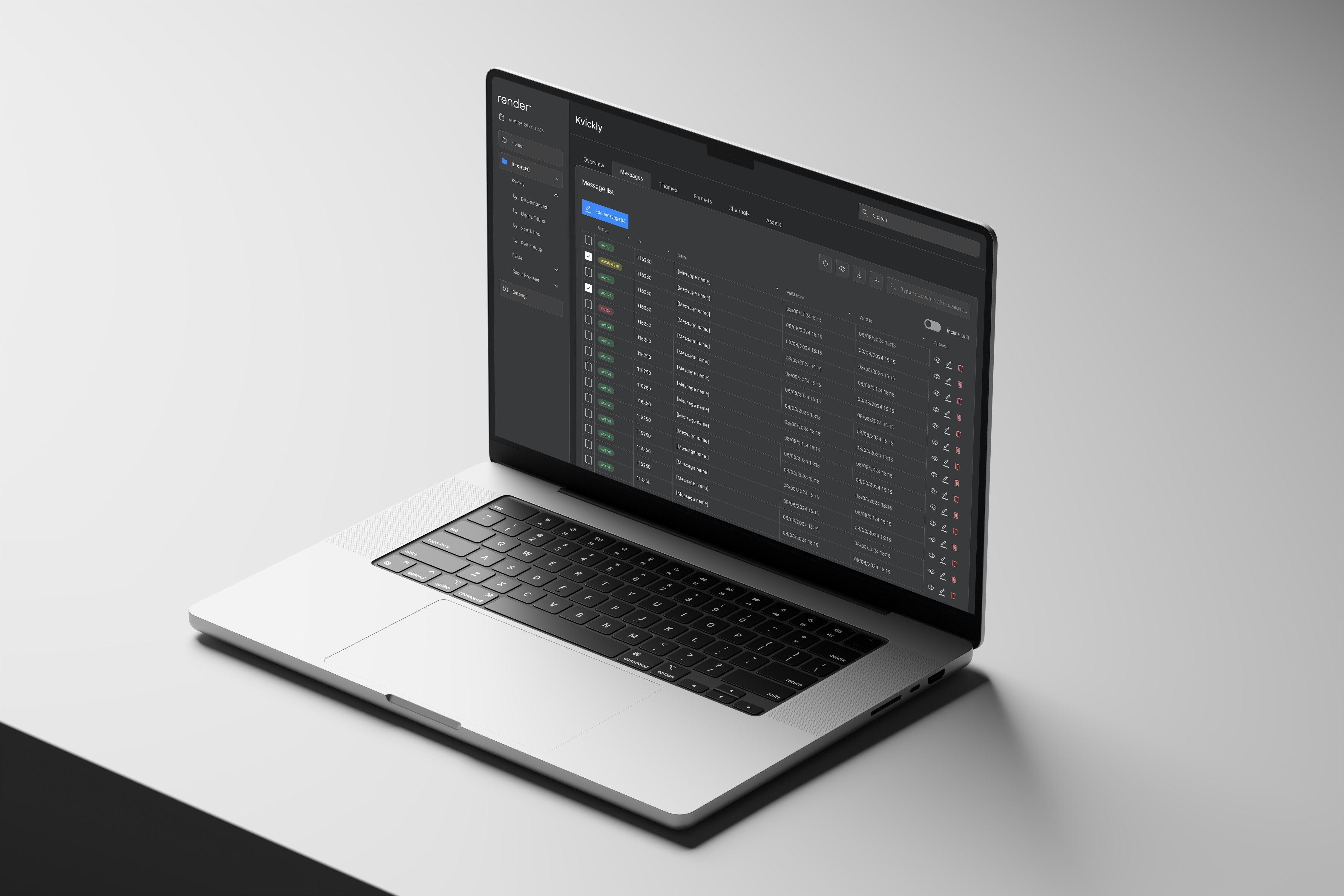
Render is an AdTech company headquartered in Copenhagen and Berlin. Established in 2017, the company set out to simplify and scale the production of digital advertisements through a template-based solution. The platform breaks down each advertisement into smaller dynamic components, allowing for flexible adjustments and seamless replication. This approach makes it possible to generate countless variations of a single campaign, ensuring clients can easily adapt messaging, visuals, and formats to different audiences, channels, and markets. By streamlining what was once a time-consuming process, Render enables advertisers to deliver highly personalized, engaging, and efficient campaigns at scale.
02
The Challenge
The goal of my role within UX/UI was to design and develop a self-service interface that empowered clients to create, manage, and control their own content outputs. The biggest challenge was translating Render’s sophisticated backend structure – well understood mainly by internal specialists – into a tool that was simple, intuitive, and accessible for clients without technical expertise.
03
The Opportunity
By giving clients more control over their content production, Render has the opportunity to transform its platform from a managed service into a scalable self-service solution. Such an interface could empower clients to reduce their dependency on internal representatives, creating space for greater flexibility, faster campaign iterations, and stronger ownership of their advertising output. This shift would open new opportunities for Render to deliver more value at scale while strengthening client relationships.

04
The Process
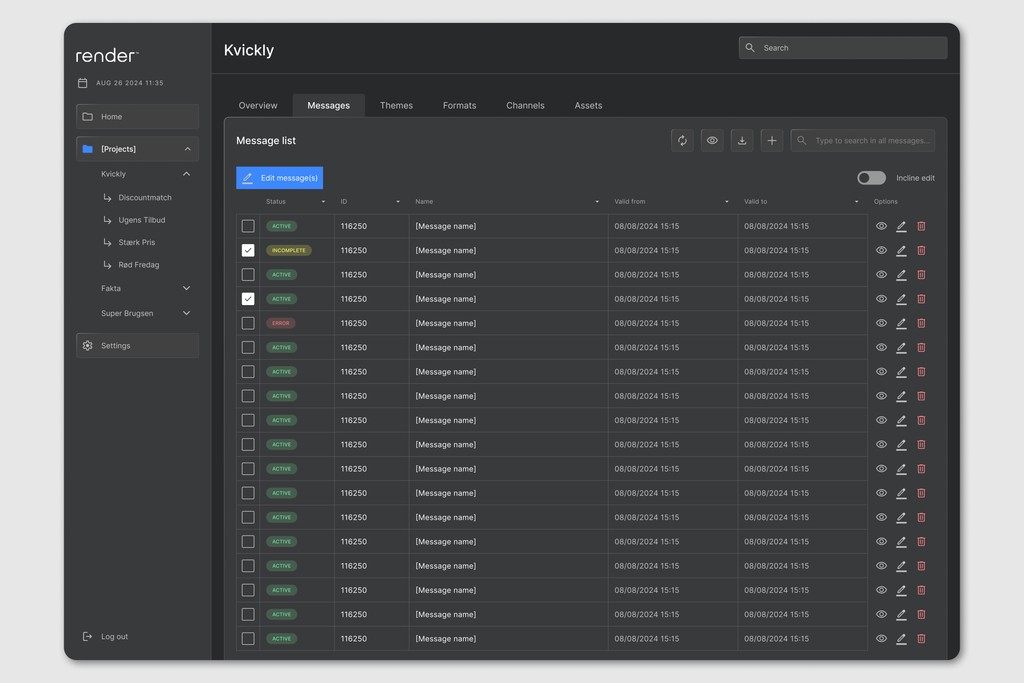
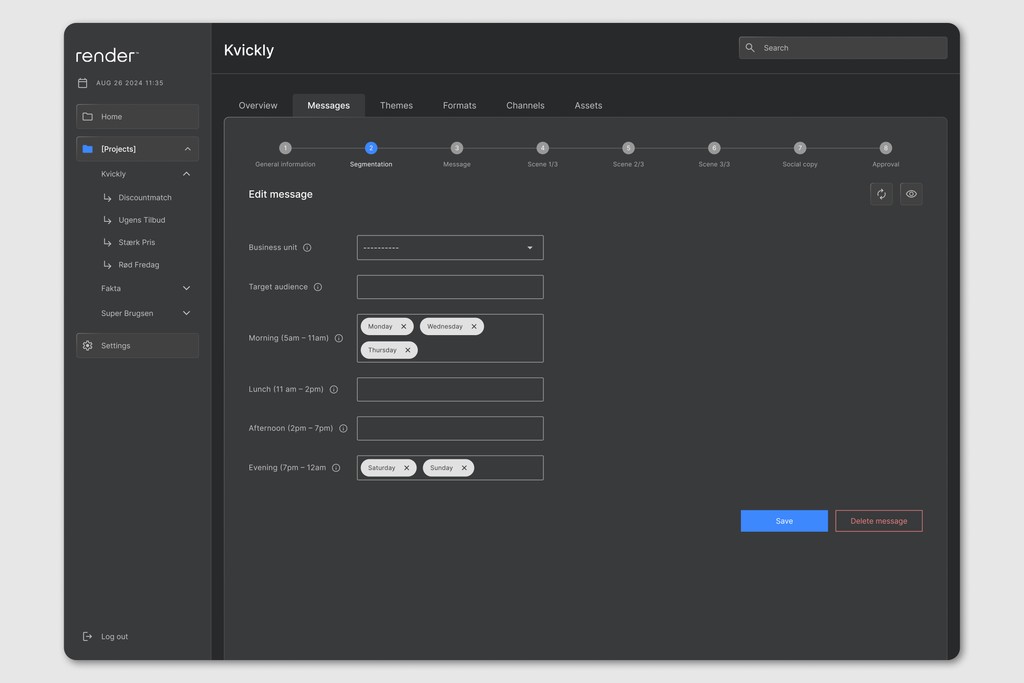
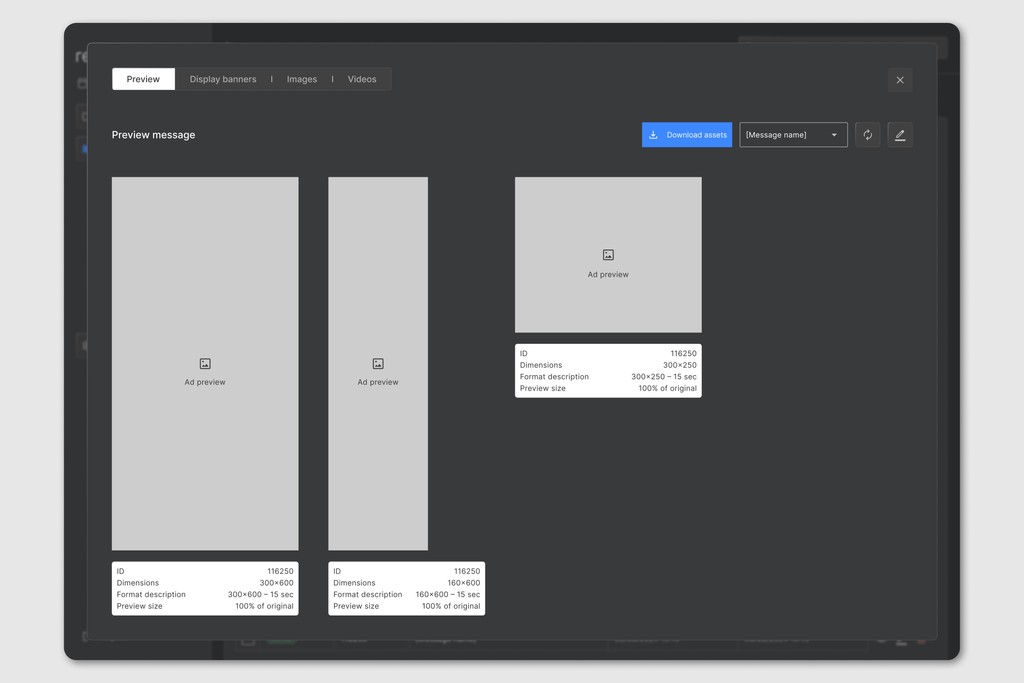
The process began with a deep exploration of the platform’s existing structure to fully understand its functionality, hierarchy, and navigation. This included mapping all input fields relevant to ads and templates, as well as analyzing how these elements related within the backend system. The aim was to translate Render’s complex architecture into a streamlined interface that felt intuitive to clients, enabling them to manage and produce content independently.
A key step was understanding both the technical structure of the system and the real needs of its users. This required gathering insights from two perspectives:
Internal expertise
Collaborating closely with the Render team to understand the hierarchy, workflows, and dependencies within the backend.
Client needs
Collecting insights from clients to identify pain points, workflows, and expectations for a self-service solution.
With this combined knowledge, I created detailed functional maps and site structures to ensure the navigation aligned with user needs while maintaining technical feasibility. This mapping served as the foundation for building a coherent and efficient user journey.
Next came the wireframing stage, where I translated these insights into visual layouts and interaction flows. The wireframes explored different approaches to presenting the templates and input fields in a way that balanced simplicity with flexibility. This stage was highly iterative – designs were continuously refined through internal reviews to ensure the interface was functional and intuitive to use.
Throughout the process, a guiding principle was to simplify complexity without losing the platform’s capabilities. The end goal was a self-service interface that seamlessly integrated into clients’ daily workflows, enabling them to create, adjust, and deploy digital advertisements with confidence and ease.
04
Future
Throughout the process, it became clear that Render was originally built as software intended for internal use, without designing for external users in mind. This has made major changes to the structure, naming hierarchy, and conventions of the product more complex. Moving forward, a key challenge will be to simplify the platform with a strong focus on user/client needs, ensuring the product evolves to be more intuitive, scalable, and aligned with the workflows of those who rely on it daily.