01
The Process
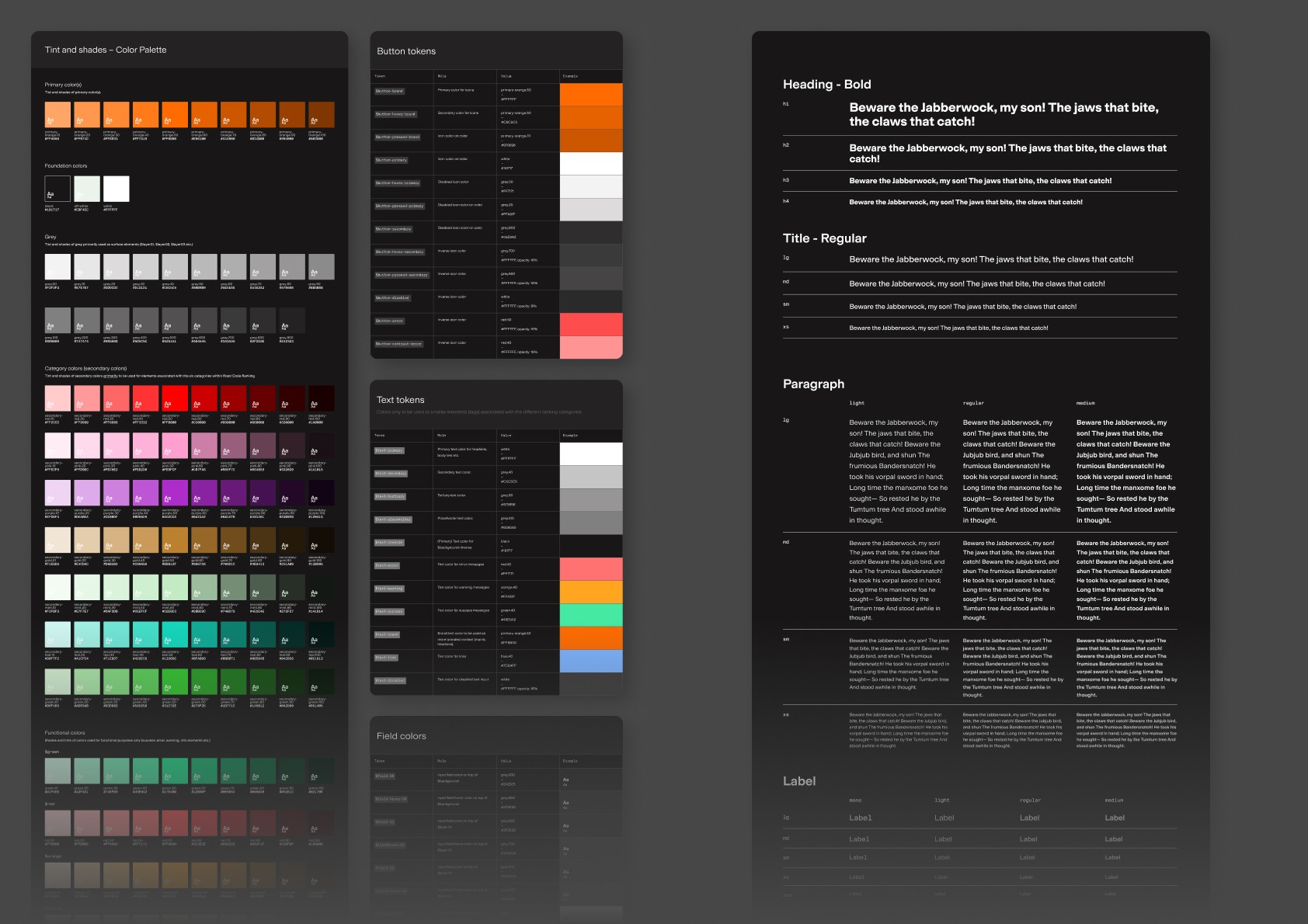
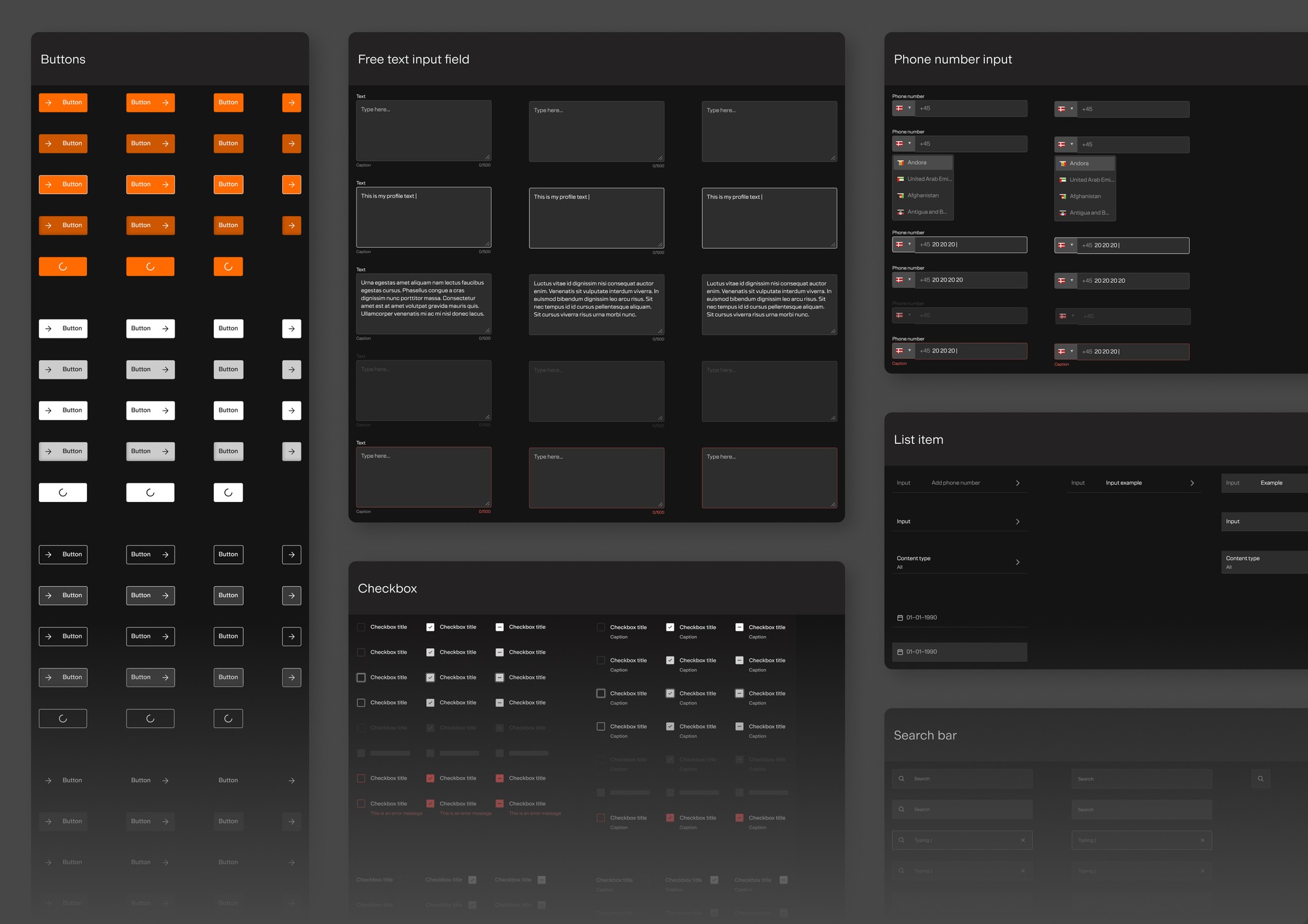
My work began with a thorough audit of the Road Code platform to map out its growing range of services – including live race data, rankings, the fantasy game, and more. Each feature brought unique visual and functional requirements, so I broke down all UI elements into their smallest components. Every variation and variable was documented in detail, including visual specifications such as color palettes, typography, spacing, and iconography, as well as clear usage guidelines to ensure consistency and efficiency.
This component-based approach allowed me to work toward a concise and scalable design system that could grow alongside the platform without losing coherence or usability. The goal was to make the system easy and accessible for everyone involved in the project, enabling both designers and developers to work with a shared language and structure.
A significant part of my work involved close collaboration with our external development team. I coordinated regularly with them to ensure that every component was not only visually consistent but also technically feasible to implement. These collaborative sessions ensured alignment between design and development and provided valuable insights for how the design system could evolve further.
The outcome was a comprehensive foundation for a design system, documenting components and guidelines in a structured way – a work in progress that could support future development and strengthen consistency across Road Code’s complex ecosystem.